
Located in the Casbah of Algiers, the Sidi Abderrahmane Eth-Thaâlibi complex includes a mosque, a mausoleum, religious annexes, and several burial sites. Built around the tomb of a great 15th-century scholar, it is both a place of worship and a memorial deeply connected to the spiritual history of the city.
The Sidi Abderrahmane Eth-Thaâlibi complex developed around the burial place of the great scholar who later became the patron saint of Algiers. The construction of a koubba in 1611, followed by the development of the mosque from 1696 onward, gave rise to one of the Casbah’s most important sanctuaries. Its dome, mihrab, minaret, and glazed tiles reflect the richness of Algerian religious architecture during the Ottoman period.
The enclosure included barracks, bastions, a powder magazine, storage areas, and the facilities necessary for its operation. Because of its location and organization, it formed a genuine fortified city, relatively autonomous above Algiers.
Practical Information
- Name: Sidi Abderrahmane Mosque
- Type of site: Mosque, mausoleum, and funerary complex
- Associated figure: Sidi Abderrahmane Eth-Thaâlibi
- First koubba: 1611
- Construction of the mosque: 1696
- Completion of the works: Around 1730
- Main interest: Religious history and Ottoman architecture
- Recommended duration: Approximately 30 to 45 minutes
- Interior access: To be confirmed before visiting
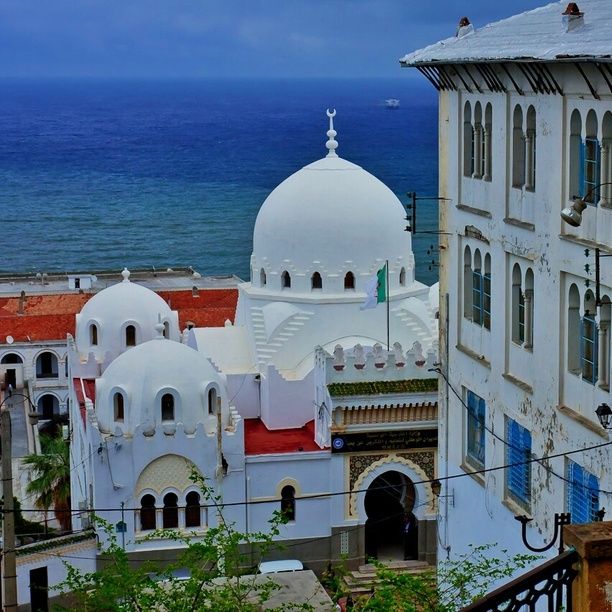
History and Architecture of the Site
Sidi Abderrahmane Eth-Thaâlibi, born in 1384 and deceased in 1471, was one of the great religious scholars of the medieval Maghreb. A jurist, theologian, and commentator on the Qur’an, he devoted a significant part of his life to teaching and passing on knowledge.
His spiritual reputation gradually extended beyond the circle of his disciples. Deeply attached to his memory, the population of Algiers eventually came to regard him as the city’s patron saint.
The complex built around his tomb reflects this special status. It remains closely associated with the religious, cultural, and popular identity of old Algiers.
From the Tomb to the Koubba
After Sidi Abderrahmane Eth-Thaâlibi died in 1471, his burial place became a site of contemplation and devotion. At the beginning of the 17th century, a first koubba—a funerary building covered by a dome—was constructed to house his tomb.
This structure became the heart of the sanctuary. Other facilities were subsequently added around the burial chamber to accommodate worshippers and support the development of the site.
Construction of the Mosque
In 1696, during the rule of Dey Hadj Ahmed, the complex was enlarged and transformed through the construction of a mosque. An inscription above the entrance preserves the date of its foundation.
The work continued during the first decades of the 18th century. Another inscription indicates that construction was completed in 1730, under Dey Abdi Pasha. The present building is therefore the result of several stages of development carried out around the ancient tomb.
A Sanctuary Connected to the History of Algiers
The complex does not preserve only the tomb of Sidi Abderrahmane. Several important figures from the history of Algiers and the Regency of Algiers were also buried there.
These burials reinforce the monument’s commemorative importance. The complex is a place where the spiritual history of the city, the memory of its inhabitants, and that of several political figures come together.
Integrated into the Casbah of Algiers—listed as a UNESCO World Heritage Site in 1992—the complex is currently the subject of preservation and restoration projects.
Architecture
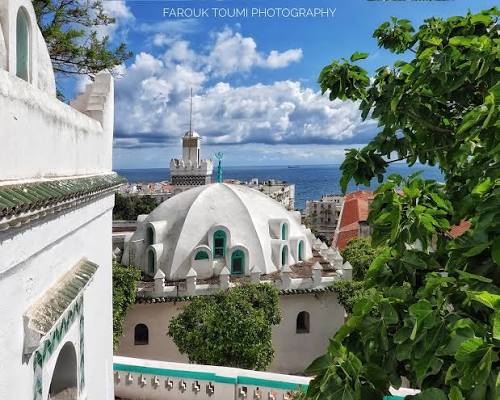
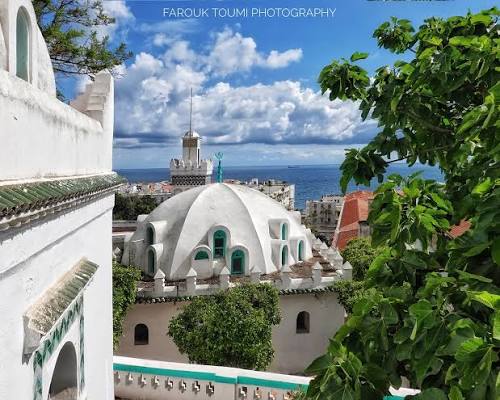
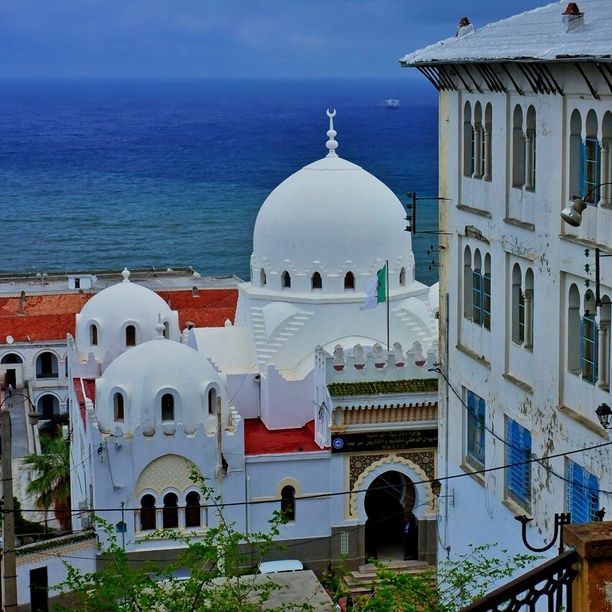
The architectural complex developed around the burial chamber. It has a square layout topped by a dome, characteristic of Maghrebi koubbas.
Inside, engaged columns allow the transition from the square plan to the octagonal base supporting the dome. The mihrab is framed by two small columns and decorated with glazed tiles.
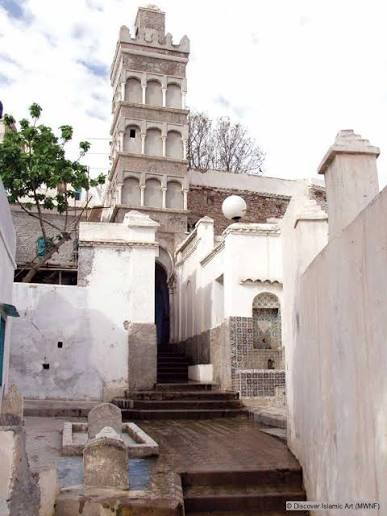
The square-plan minaret is distinguished by its different levels, decorated with blind arcades and ceramic panels. The architecture combines local traditions with decorative influences from the Ottoman period.
Visiting Advice
Discovering Sidi Abderrahmane Eth-Thaâlibi requires an approach different from that of a purely tourist monument. The mosque and mausoleum continue to serve an active religious and spiritual function.
Take the time to observe the layout of the complex, the dome, the minaret, and the ceramic decorations. If interior access is permitted, remain respectful of the site’s silence and avoid photographing people without their permission.
Translation based on the page provided