
From the Barracks to the Dey’s Palace
The Millennium House is located near Bab Jedid, in the Upper Casbah of Algiers. It recreates the main features of traditional housing in the old city. Built in 1930 by architect Léon Claro, it presents the interior layout, materials and decorations of an Algerian house organised around a central courtyard.
A Typical Casbah House
An architectural reconstruction designed to explain the layout and decoration of the traditional Algerian house.
Practical Information
- Name: Millennium House
- Type: Traditional-style model house
- Address: Bab Jedid, Upper Casbah, Algiers
- Date of construction: 1930
- Architect: Léon Claro
- Main interest: Casbah residential architecture
- Type of visit: Cultural and architectural
- Approximate duration: 30 to 45 minutes
- Interior access: It is advisable to check in advance
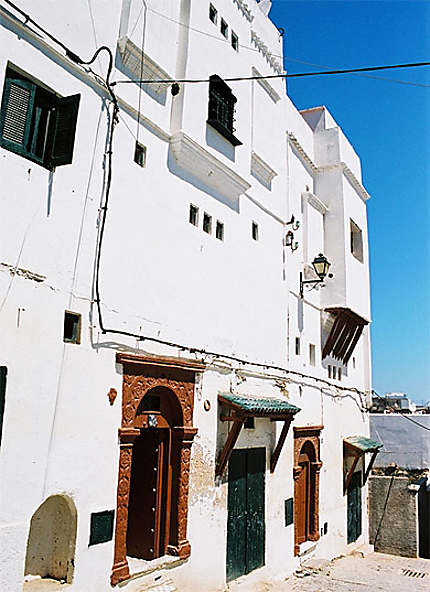
Histoire et architecture de d'immeuble
A House Built to Present the Casbah
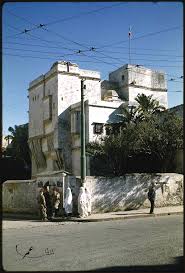
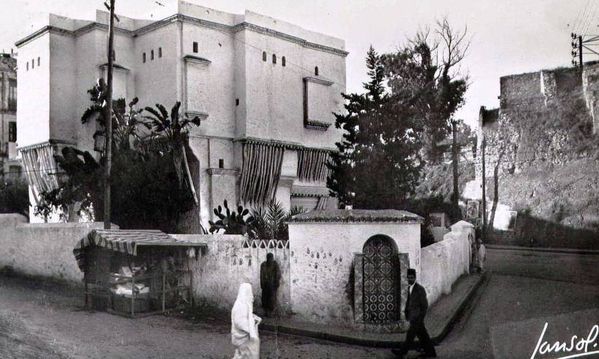
Despite its name, the Millennium House is not a thousand-year-old residence. It was built in 1930, during the colonial period, to mark the centenary of the French conquest of Algeria.
It was designed by architect Léon Claro to showcase the forms and decorations characteristic of traditional Casbah housing. Its construction is said to have incorporated, among other materials, elements taken from old houses demolished during the urban transformations of Algiers.
It was initially called the Centenary House, before later being renamed the Millennium House, referring to the long history of Algiers.
From the Centenary House to the Millennium House
Built in 1930
The house was created as an exhibition and educational building, allowing visitors to discover the main spaces of a traditional Algerian home, including:
- The protected entrance;
- The central courtyard;
- The galleries;
- The living rooms;
- The rooftop terrace.
It is therefore not an exact copy of a particular house, but an architectural synthesis inspired by traditional homes in the old city.
A Landmark with a Distinctive History
After its construction, the Centenary House was used for various administrative and cultural purposes. Following restoration, it was renamed the Millennium House and hosted activities related to culture and the preservation of Algiers’ urban heritage.
Today, its history reveals two complementary aspects:
- The residential architecture of the Casbah;
- The way this architecture was studied and represented during the colonial period.
Architecture Focused Inward
Like many Casbah houses, the Millennium House is organised around a central courtyard known as wast ed-dar, meaning “the middle of the house”. This space provides light and coolness while connecting the different rooms.
From the street, the house appears relatively closed and discreet. Its architecture is gradually revealed after passing through the entrance. This layout protects the privacy of the family and differs from the more open façades of European architecture.
The galleries, arches, columns, ceramic tiles and wooden details give the house its distinctive character. The rooftop also reflects the important role of outdoor spaces in the daily life of Casbah residents.
Details Worth Observing
1. The Central Courtyard
It is the true heart of the house. It organises circulation and allows light and air to enter the interior spaces.
2. The Galleries and Arches
They surround the central courtyard and provide access to the different rooms.
3. Ceramic Tiles
Their colours and patterns decorate the walls and protect their lower sections.
4. Doors and Woodwork
They demonstrate the care given to both functional elements and decorative details.
Visiting Advice
The Millennium House is located in the Upper Casbah, near Bab Jedid and the Citadel. Because of the steep streets, numerous stairs and uneven surfaces, comfortable shoes are recommended.
The visit is more informative when accompanied by explanations about the organisation of the traditional Algerian house. A guided tour can also help visitors distinguish between elements inspired by traditional architecture and the specific circumstances in which the house was built in 1930.
Before Visiting
- Check whether access to the interior is possible;
- Allow between 30 and 45 minutes;
- Combine the visit with a walk through the Upper Casbah.